
What Does the Phrase “Turnkey” Mean?
In auto logistics, “turnkey” refers to a single final amount that includes absolutely everything: purchase, delivery, customs, certification, and registration. This format allows you to understand exactly how much a Korean car costs in Ukraine with all expenses included and compare its real value with prices from other sources.
Structure of the Turnkey Price:
- Vehicle price at the site (Encar, K-Car, Manheim auctions);
- Agent or logistics company services in Korea;
- Delivery to the port of departure and loading – into a container or onto a RO-RO vessel;
- Ocean freight to Odesa;
- Unloading, terminal storage, and transportation across Ukraine;
- Customs payments: duty + excise + VAT + pension fund fee;
- Certification of compliance with Euro standards and MTSBU;
- Registration and obtaining the vehicle registration certificate.
Each of these points is a separate expense item, where the key role is played by the customs clearance of the car from Korea 2026, the price of which is often subject to unexpected adjustments.

Customs Payments – The Main Item and the Biggest Surprise
There is a clear accrual structure for individuals importing cars. However, there are nuances that beginners often learn too late.
- Customs Duty: 6.5% of the customs value. The problem is that the customs value and the purchase price are not the same thing. Customs may “raise” the valuation by 20–40% above the real price based on their own databases of similar vehicles. This phenomenon is called “customs value adjustment” and is the most common surprise for first-time importers.
- Excise Duty: Depends on engine displacement and year of manufacture. For a 2.0L gasoline engine and a 2021 model year car, it is approximately €1,200–1,700. For 3.0L+ engines, budget €3,000 or more.
- VAT: 20%, calculated on the sum of (customs value + duty + excise).
- Pension Fund Fee: 3% of the car’s value.
Please note: An accurate calculation is always individual and depends on the specific model, year, and the inspector’s appraisal.
A Concrete Example
Hyundai Tucson 2021 MY, 45,000 km mileage – approx. $13,000 on a Korean site.
Add:
- Port logistics and ocean freight: $1,200-1,500
- Customs payments: €4,500-5,500 equivalent
- Certification and registration: $350-450
- Total Turnkey: $18,000-20,000.
- A similar Tucson on the secondary market costs $22,000-25,000. The difference is real and significant.
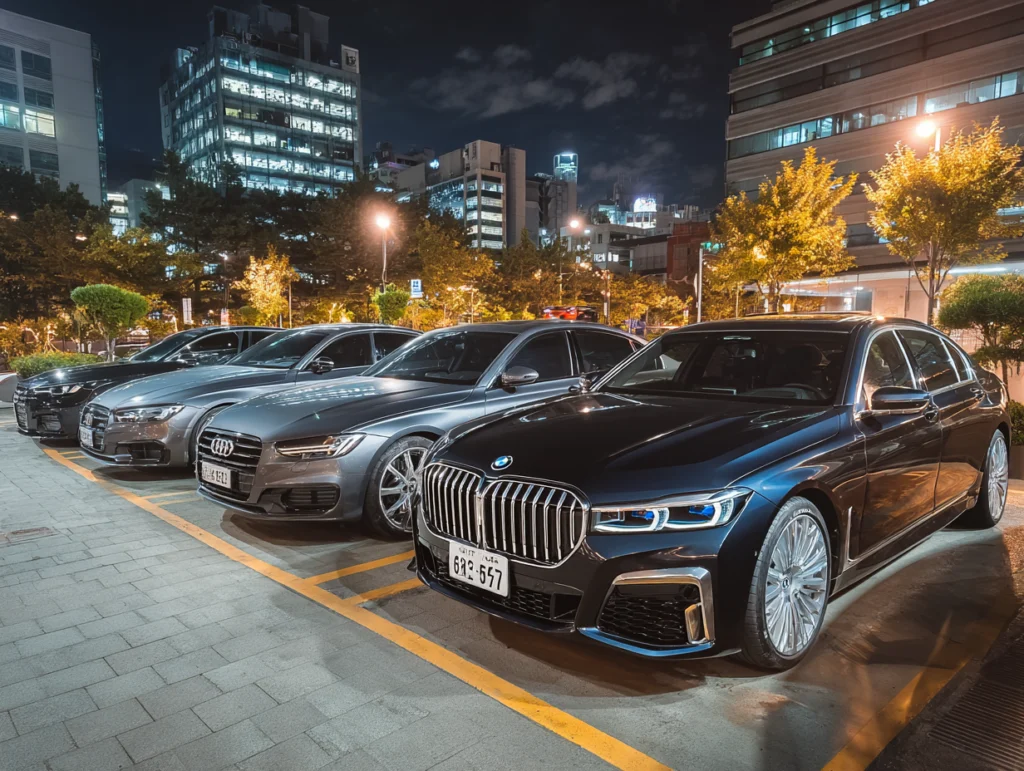
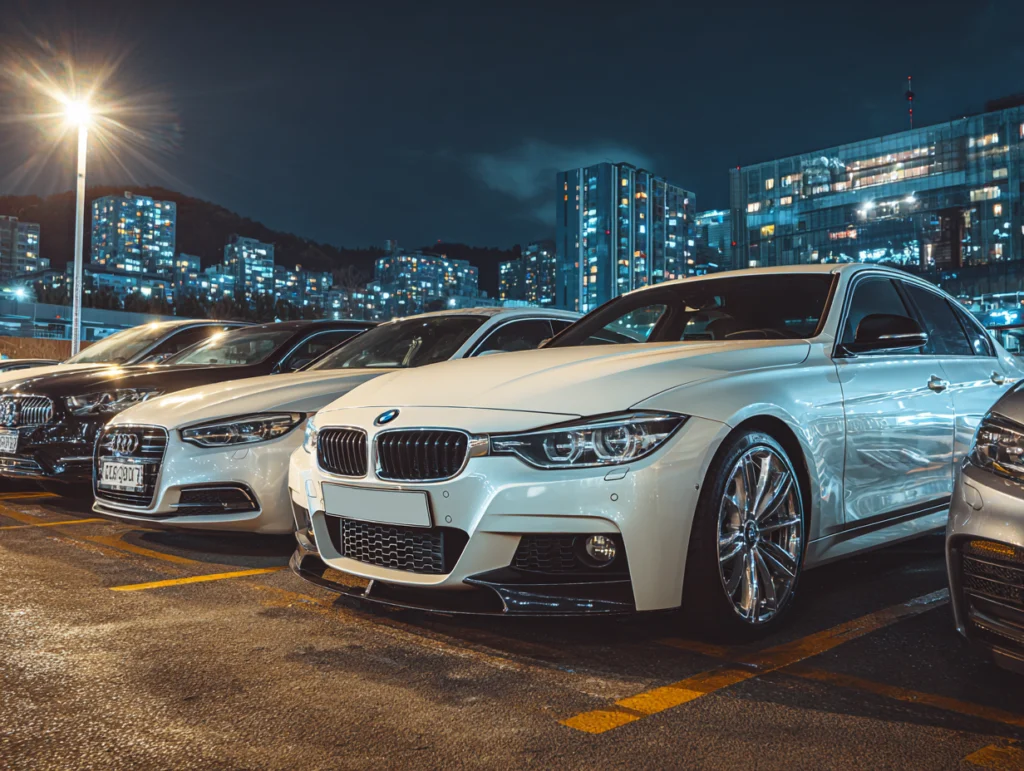
If we look at a premium class car, the savings are even more noticeable. Koreans buy BMWs and Mercedes in full configurations that simply don’t exist in Europe. You can bring an S-line from Korea with rear-seat heating, a panoramic roof, and massage seats for the price of a standard B8.
Why Online Calculators Don’t Give Accurate Results
Many websites offer automatic import cost calculations. However, such tools provide only a guideline because they do not account for:
- Fluctuations in the UAH and EUR exchange rates on the date of customs clearance;
- Potential customs value adjustments – adding 20-40% to the calculation base;
- Specific trim levels and technical condition of the car;
- Terminal storage costs after the 7-10 free days;
- Non-standard situations: LPG equipment, cars pre-dating 2014, or atypical engine sizes.
Naviline provides a comprehensive financial report before the deal is finalized, so you understand exactly what the total cost of the car from Korea will be until registration. The contract fixes the prices for the company’s services and the conditions for any changes. Naviline specialists check the VIN via Carfax and Korean databases before payment and provide support at all stages. Having our own terminal at the port ensures speed and eliminates unnecessary intermediaries.
FAQ: Frequently Asked Questions
How much does it cost to ship a car from Korea to Ukraine?
Ocean freight Busan-Odesa ranges from $600 to $1,200 depending on the type of shipping and the season.
Can customs increase the car’s value?
Yes, and it happens regularly. Adjusting the customs value to 20-40% higher than the actual purchase price is common practice. That’s why we always provide a range in our calculations. It depends on the model, year, and the specific inspector’s assessment.
What is included in certification? A Certificate of Conformity (CC) for Euro standards, MTSBU, and documents for registration. Without a CC, registration in Ukraine is impossible. Cars older than 2010 with Euro 3 standards are harder to certify – it is better to aim for cars from 2014 onwards.