
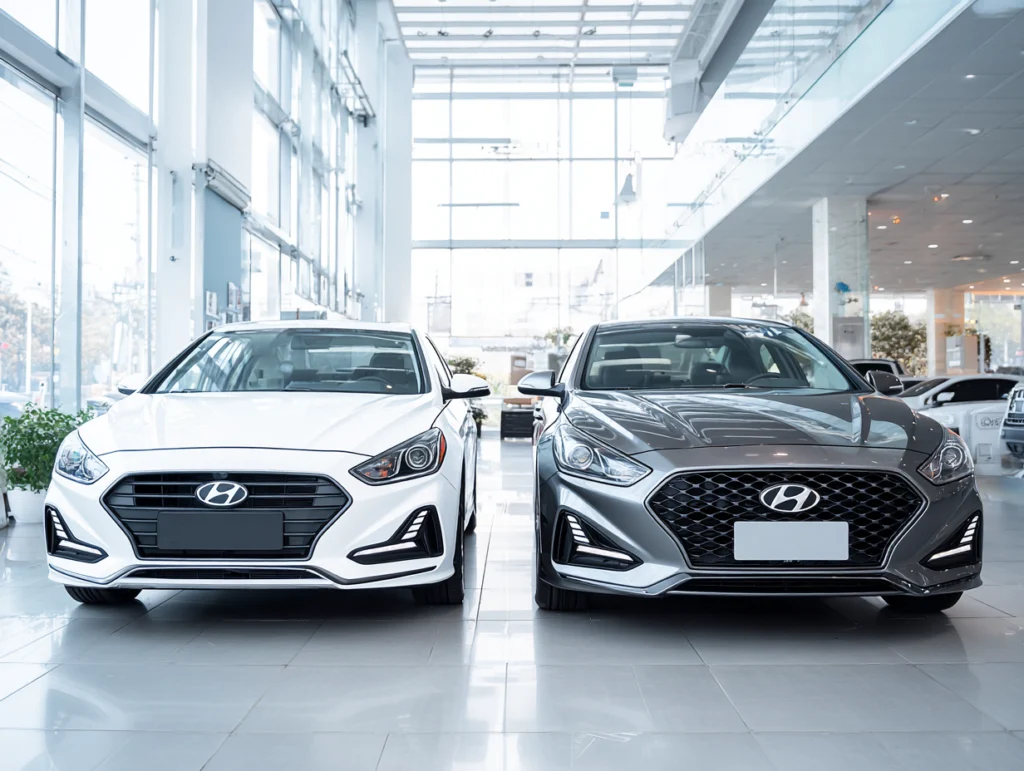
Popular Korean hybrids and electric vehicles for import
Korean marketplaces offer an impressive selection of hybrid and electric vehicles. The most popular among them are:
Kia Niro Hybrid / PHEV / EV – a compact crossover available in three versions. The PHEV version is particularly popular, offering up to 50 km of electric-only driving range.
Hyundai Tucson Hybrid – an all-wheel-drive hybrid equipped with a 1.6-liter turbocharged engine. Comfortable, economical, and one of the most predictable vehicles in terms of maintenance costs.
Hyundai Sonata Hybrid – a sedan with a factory-installed LPG system as an alternative option. A practical choice for those who value total ownership costs over a 3-5 year period.
Kia Carnival Hybrid – a minivan with a hybrid powertrain, a rarity in this segment and consistently in high demand on the market.
Hyundai Ioniq 6 – a fully electric vehicle with a WLTP range of over 600 km, one of the most talked-about EVs in recent years.
The price range for these models with mileage between 30,000 and 60,000 km is $15,000-30,000, depending on the year and configuration. However, this is the marketplace price, not the turnkey cost. The final price including delivery and customs clearance is always different and should be calculated in advance.
How Korean hybrids differ from Chinese counterparts
There are several key differences that often go unnoticed.
Battery reliability. Hyundai and Kia hybrids use proprietary battery systems with a proven service life. Vehicles manufactured between 2018 and 2020 with mileage of 80,000-100,000 km typically retain 85-92% of their battery capacity. Chinese models entered export markets much later, so there is still insufficient long-term data for a direct comparison.
Spare parts availability. Original components for the Kia Niro and Hyundai Tucson Hybrid are supplied through distributor networks in various countries, including compatible aftermarket alternatives. Spare parts for Chinese hybrids may be available, but supply is often less predictable.
Price. This is where China has an advantage, with potential savings of $3,000-5,000. However, maintenance-related concerns due to parts availability may offset these savings. Buying cheaper is possible, but owning and operating the vehicle more cheaply is not always guaranteed.
There is another point that is rarely discussed when purchasing a Chinese electric vehicle: the specifics of LFP batteries, which are used in most models. At temperatures of -15°C, this battery type may lose up to 30-40% of its capacity. In addition, some Chinese models may have region-locked software updates that become unavailable outside China.
Hybrid and electric vehicle customs clearance features
Customs clearance for hybrid and electric vehicles has its own specifics that should be considered in advance.
For full hybrids (HEV), the excise tax is calculated based on the displacement of the internal combustion engine, similarly to conventional gasoline-powered vehicles.
For plug-in hybrids (PHEV), the excise tax is calculated in the same way – based on the internal combustion engine.
Human factors often play a role in customs calculations, as interpretations may vary depending on the inspector and the specific model.
Only fully electric vehicles (BEV) are exempt from excise tax.
For example, a Hyundai Ioniq imported to Ukraine, including delivery, customs clearance without excise tax, certification, and the auction purchase price, will cost approximately $30,000-33,000. Purchasing a similar vehicle from an official dealer may cost an additional $10,000-15,000.
Questions to ask a Logistics Specialist before purchasing
To avoid unnecessary expenses, ask the following questions before selecting a vehicle:
– What is the current excise tax rate for this specific model and model year?
– Are there any certification restrictions for this battery type?
– What is the actual battery condition, and can it be verified before purchase?
– Does the vehicle require regional software reconfiguration or firmware updates?

At Naviline, qualified specialists provide detailed and transparent answers to all your questions, help eliminate uncertainty, assist in selecting a vehicle that meets your requirements, and calculate delivery and customs clearance costs for any hybrid or electric vehicle model.